
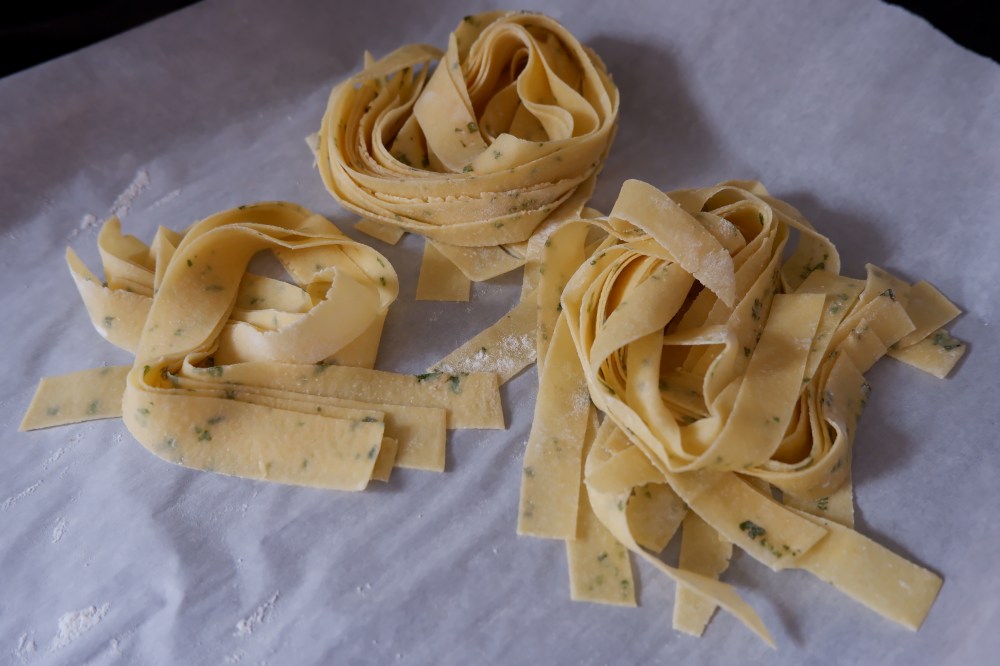
Making pasta is such a meditative craft which I have found myself turning to time after time. It’s not only a relaxing activity but a creative outlet. This recipe was an experiment in adding fresh herbs to your regular pasta dough. I have been testing out various natural colouring methods for dough, but had yet to try adding something whole and fresh. The addition of fresh herbs into the dough not only adds some beautiful colour, but a subtle basil flavour lingers in every bite. The use of semolina flour in combination with all-purpose flour is also a particularly nice change in this recipe, adding extra texture to the final cooked pasta. If you’re not into basil, you can easily swap it for a different fresh herb or edible flower. In addition to changing the flavour, you can certainly use this same recipe to form many different shapes of pasta including farfalle, linguine, fettuccine, heck, even ravioli!
Semolina and Basil Pasta Dough
Ingredients:
- 200g (1 ⅔ cup) all-purpose flour
- 200g (1 ⅔ cup) semolina flour
- 3 large eggs
- 3 tbsp water
- 1 tbsp olive oil
- 1 handful fresh basil, roughly chopped
Method:
On a clean surface, place both flours in a pile. Using your finger tips, create a well at the center by pushing the flour to the edges. Make sure that the well is large enough to accommodate all of the liquid ingredients without spilling over.
Next, add the remaining ingredients to the center of the well. Using a fork, whisk all of these wet ingredients together. Once they are evenly incorporated with each other, begin whisking flour from the edges of the well into the liquids.
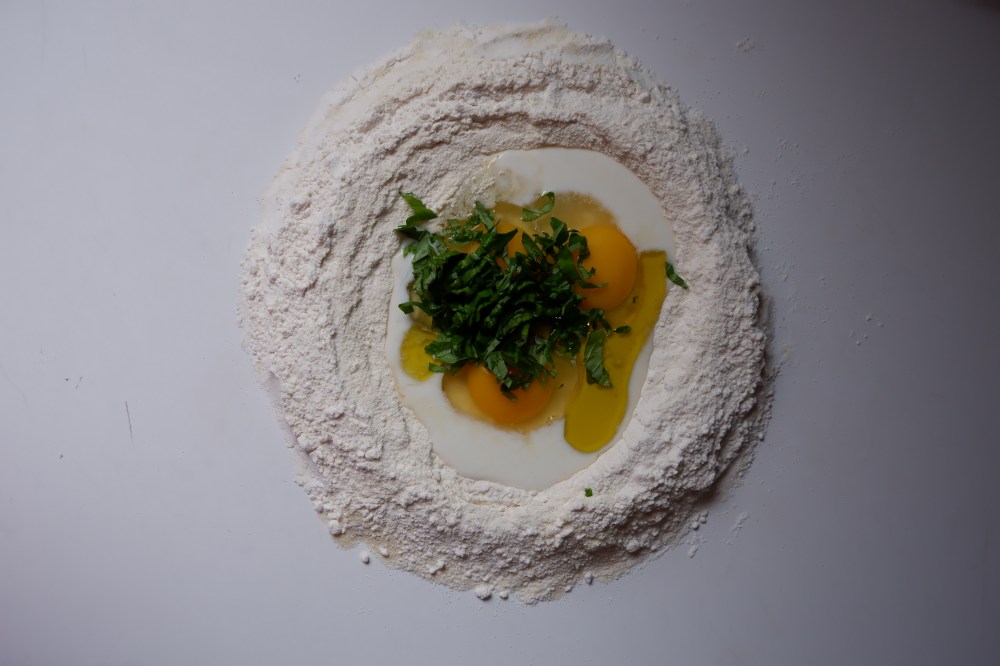
Continue to gradually add flour until you have a thick paste. At this point you will have to ditch the fork and begin using your hands to incorporate the rest of the flour. I like to also use a bench scraper to help scrape up anything stuck to the counter. Continue to work the dough by kneading it for 5-8 minutes or until a smooth dough forms. Wrap the kneaded dough in plastic wrap and allow to rest on the counter for 40 minutes.
Using a knife or bench scraper, divide your rested dough into six even pieces. Because we will be working with one piece at a time, keep the remaining dough covered in plastic wrap so that it does not dry out.
Starting with one blob of dough and a rolling pin, roll the dough to approximately ½ inch thick, or a thickness that will fit into the widest setting on your pasta rolling machine. If your dough is feeling wet or sticky, dust your rolling pin and pasta machine lightly with flour.
Note: A well rested dough should not need very much flour as it will have a softness but not have a stickiness to it.
Roll the dough through the widest setting of the pasta machine. After the first roll, fold the dough into thirds, creating a small rectangle. Roll this folded rectangle through the widest setting again. Find the dial on your machine and turn it to one setting smaller. Roll your dough through this setting two times. Continue to decrease the width of your roller using the dial, rolling through each thickness setting twice. Do not roll to the thinnest setting on your machine as this will be too thin for stuffed pasta. Each machine has a different number of settings, but on my machine I roll to the second to last thickness, which is labelled “6”.
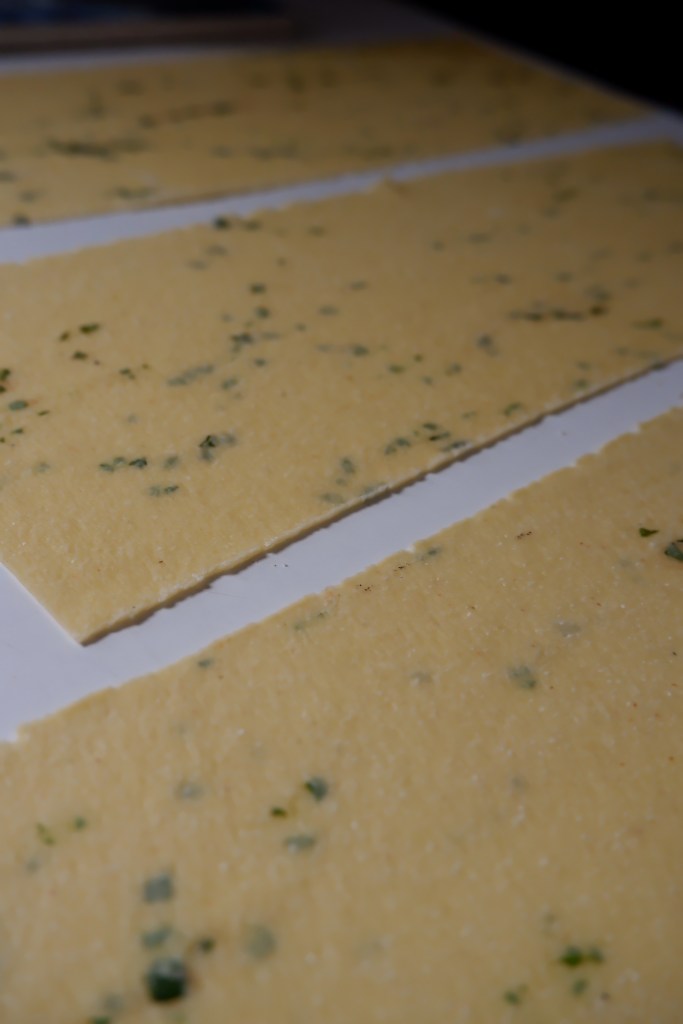
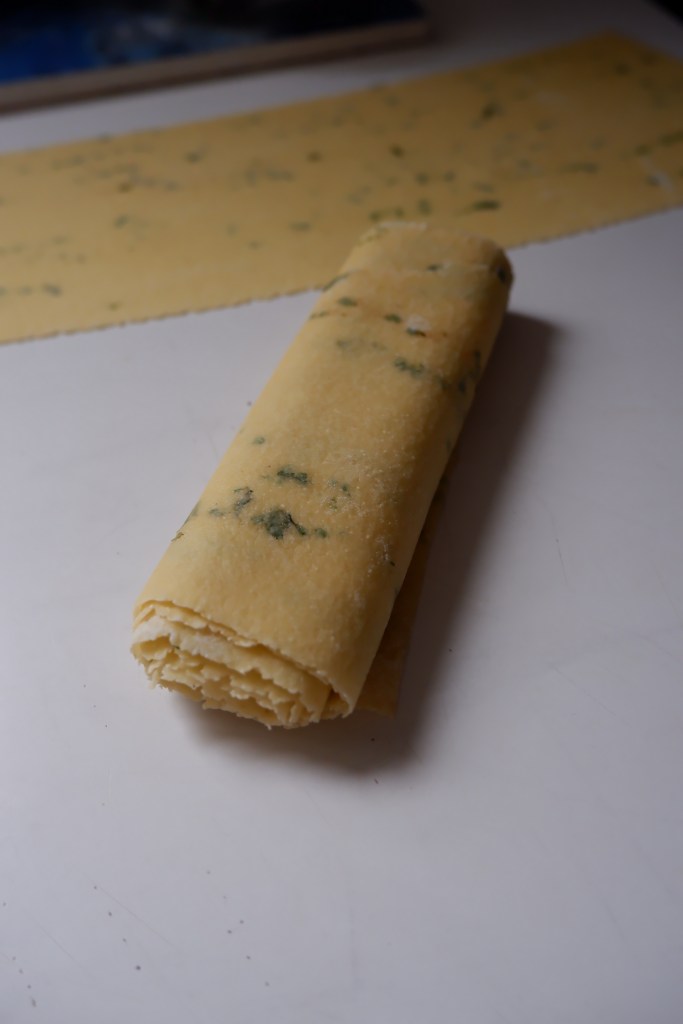
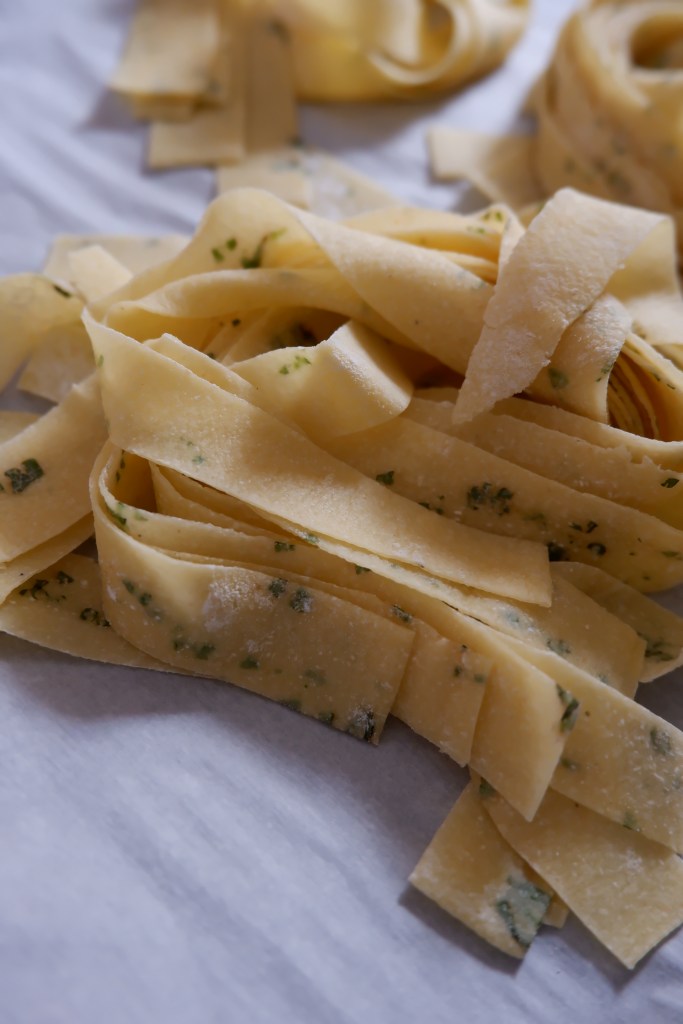
Let this rolled sheet dry slightly on the counter for 5-8 minutes. Once it has dried a little to the touch, gently roll or fold the sheet width wise until you have a nice compact roll. Using a sharp knife or a sharp bench scraper, cut strips of dough 1-2 cm wide (depending on how thick you like your pappardelle). Lay cut pieces on a tray lined with parchment paper and lightly dusted with regular all- purpose flour or semolina.

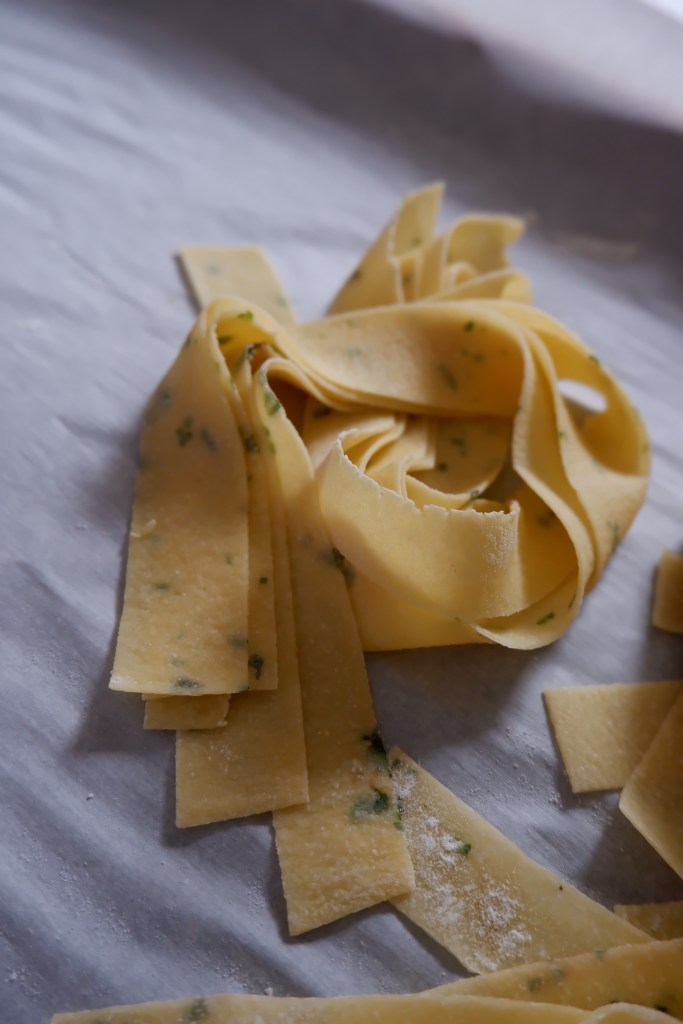
Repeat all of the above steps until you have used all of the dough.
Cooking:
Bring a pot of salted water to a boil. Place a noodle in the water and set a timer for 1 minute. This will be your “tester” pasta. After 1 minute, remove the pasta from the water with a slotted spoon and taste for doneness. If it is not fully cooked, add 30 seconds more to your timer. Once you have determined the best cooking time, cook your pasta in batches to avoid overcrowding the pot. Cooking too many at once will lower the temperature of your water, as well as may cause your fresh pastas to stick together while cooking.
Storing:
Place your trays of fresh pasta in the freezer for about 45 min- 1 hour. Once the pastas are frozen, remove them from the trays and either store them in plastic bags or airtight containers. You can cook these straight from frozen using the same method outlined above.

 This Gal Cooks
Published by